Mostrar mensagens com a etiqueta donald trump. Mostrar todas as mensagens

quinta-feira, 25 de setembro de 2025

The US Culture War against Europe

c6df2d68-080a-4543-9d72-a4bdfcb6f039.png.webp

“I hate to say that I told you so, but I told you so.” It may seem self-serving to appeal to one’s own foresight, but in the face of facts, it becomes inevitable.

Since 2018, I have been focusing on the so-called “culture wars”, a phenomenon rooted in the clash between so-called “conservatives” and “progressives” around moral issues such as abortion, the role of religion in society, same-sex marriage and other LGBT rights, gender identity, immigration, or national identity. These differences generate extreme polarization, amplified by social media, and translate into a genuine struggle for cultural hegemony at the heart of our societies.

In the face of the rise of a cultural left, which abandoned workers’ struggles to concentrate on identity-based causes and whose values gradually became dominant within social institutions, there emerged an inevitable reaction in the opposite direction—the so-called “cultural backlash”, a political response promoting ethnonationalist values.

This brings us to the recent report by the European Council on Foreign Relations (ECFR), in partnership with the European Cultural Foundation, which states that Donald Trump is waging a “culture war” against liberal democracy in Europe, fostering an ideological shift toward nationalist and illiberal values.

A report that is not only unsurprising but also belated. For quite some time, Europe has been the privileged stage for illiberal experiments, reopening old wounds on a continent scarred by the traumas of nationalism and authoritarianism. The political transformations that unfolded in Europe after the 2008 financial crisis and the 2015 refugee crisis are paradigmatic of the electoral drift toward what political scientist Cas Mudde has called the “far right.”

The instrumentalization of economic resentment in favor of an ethnic and religious nationalism—directed against immigrants, the left, and multiculturalism—resonates deeply with the emergence of nationalisms in the 1930s, the results of which are all too well known.

Yet Le Pen, Orbán, Fico, Farage, Meloni, or Wilders are not merely the result of MAGA-style ideological channelling of resentment, as the report suggests. In fact, the “culture war” Trump is now waging against European institutions, the multilateral order, the values of fundamental rights grounded in the principle of human dignity, and the foundations of the liberal rule of law, began with Putin. And here the report falls short.

It is precisely with Vladimir Putin that the seeding of racial and religious nationalism in Europe begins—a process that culminates in the war in Ukraine. Let me explain: Putin viewed NATO’s eastward expansion not only as a geopolitical issue, but as a civilizational one. Conceiving Russia as its own civilization, based on a distinct cultural and religious identity, Byzantine in orientation and czarist in spirit, Putin regarded NATO’s presence on his border as a civilizational threat—representing the advance of liberal democracy and its inclusive values, which undermine Russia’s spiritual order with sexual freedom, women’s emancipation, and LGBT rights.

It was precisely to confront liberal democratic values that Putin financed the European radical right, promoting an illiberal order whose Western epicenter became Orbán’s Hungary.

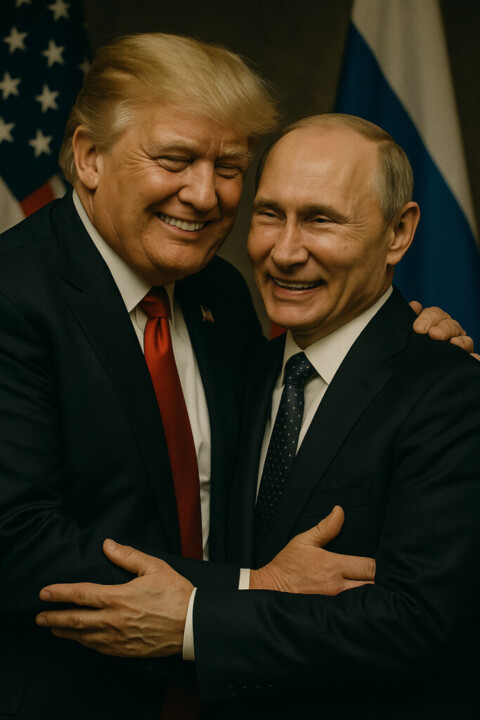
Trump’s “culture war” against Europe is therefore part of a broader cultural war that unites a nationalist international of authoritarian inspiration, neofascist in kind. The exaltation of a nationalist ideal of economic, industrial, cultural, and geopolitical closure is a project that binds Trump and Putin with the same objective: to dismantle Europe’s human rights order and its liberal democracy from within.

Europeans would do well to remember the old maxim: those who fall asleep in democracy, wake up in dictatorship.

terça-feira, 23 de setembro de 2025

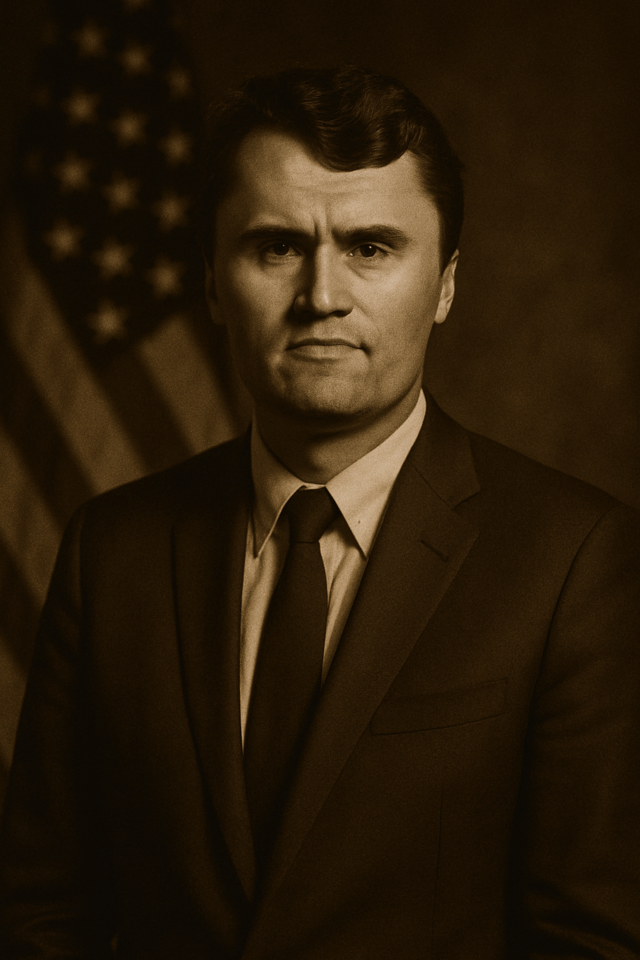
Quem era Charlie Kirk, o rosto do ativismo conservador radical americano?

86c2bf1d-aa3c-44a7-9219-388d00dd2440.png

O seu ativismo conservador radical começa no liceu, através do envolvimento na política local. Porém, a viragem acontece na Universidade, na Harper College. Em linha com o chamado cultural backlash, isto é, o movimento culturalmente reativo face ao progressismo, Kirk via as universidades americanas como espaços de doutrinação, cadeias de transmissão de ideias progressistas, de forma totalizadora. Esta visão conservadora, que condena a existência de um suposto «marxismo cultural» a dominar a sociedade americana, assenta numa leitura invertida da teoria gramsciana de «hegemonia cultural». 

Ou seja, Kirk foi inspirado por uma corrente de nova direita, culturalista, que olhou para o avanço acelerado do progressismo, associada à esquerda culturalista, e, relendo Gramsci, considerou que para reconquistar a hegemonia supostamente perdida para a esquerda culturalista, teria de começar pela cultura, através de intelectuais orgânicos. É nesse papel que Kirk se viu e atuou.

Assim, em 2012, ainda com 18 anos, cofundou, com Bill Montgomery, a organização Turning Point USA (TPUSA), cujo escopo era a promoção de valores conservadores em campi universitários, através de ações, em especial debates, palestras e distribuição de informações com panfletos. 

Em 2019, Kirk funda outra organização, Turning Point Action (TPAction), que juridicamente contorna as limitações da TPUSA, agindo como braço político, envolvendo-se em campanhas políticas locais e nacionais, recrutamento porta-a-porta de jovens, bem como o movimento “Students for Trump” para as eleições de 2020. 

O seu ativismo incidia em ações públicas pelo país, como os debates nos campi universitários, com o formato “Prove Me Wrong”, e uma intensa representação mediática, sobretudo através das redes sociais e do seu podcast “The Charlie Kirk Show”. 

Os temas

Kirk rapidamente se tornou num dos rostos mais emblemáticos do conservadorismo radical, a hard-right, e do movimento MAGA. O seu foco era o nacionalismo cristão, defendendo uma clara convergência entre Estado e confessionismo, com os valores cristãos a deverem orientar a moral social e política. Essa visão praticamente teocrática da vida política e social, levava-o a tomar posições como a condenação absoluta do aborto, em qualquer circunstância, considerando-o crime gravoso, chegando a colocar a questão num plano equitativo ao holocausto. Esta posição reflete a forma como o conservadorismo radical soube recuperar a retórica inflamada da era da ascensão do fascismo. 

Também em relação aos direitos LGBTQ+, Kirk progressivamente adotou uma posição tipicamente da reação cultural do nacionalismo radical, vendo no avanço dos direitos das minorias sexuais uma agenda política para colocar em causa a família tradicional. Essa progressão de uma posição mais moderada, que admitia os direitos LGBTQ+, porém rejeitava a imposição de uma política de linguagem típica do progressismo radical “woke”, para uma posição mais concordante com o nacionalismo cristão, traduz a forma como Kirk foi hábil a navegar a onda nacionalista MAGA. 

Sobre a imigração, outro tema central para a direita radical, Kirk adotou uma visão muito crítica, apoiando políticas restritivas de entrada e de controlo, fazendo uso de uma linguagem alarmista sobre “invasão” e perigo criminal, concordante com a teoria da “grande substituição” em voga na direita radical europeia. 

Outro tópico fraturante na sociedade americana é as chamadas políticas DEI, ou seja, Diversidade, Equidade e Inclusão, desenhadas para corrigir falhas sistémicas da sociedade americana contra minorias raciais, e que pelas mudanças demográficas no país começaram a ser vistas como programas políticos da esquerda contra a maioria branca, entrando no eixo da teoria da “grande substituição”. 

Vírus da China

Kirk ganhou grande visibilidade durante a Covid-19, espalhando desinformação, críticas à OMS, promovendo a hidrocloroquina, e falando de um “vírus da China”, como parte de uma luta política antecipada do trumpismo. Durante esse período, fez intensa campanha contra os confinamentos, vendo-as como políticas de controlo estatal. 

Legado

O trabalho de doutrinação radical cristã de Kirk permanecerá através da Turning Point USA, agora liderada pela sua mulher. Donald Trump, que foi um grande beneficiário do trabalho de Kirk, que mobilizou milhares de jovens para o movimento MAGA, aproveitou a sua morte para lançar uma política de perseguição a organizações e movimentos progressistas, numa verdadeira “caça às bruxas” ao estilo da guerra fria.  

segunda-feira, 14 de julho de 2025

“Witch Hunt”: Trump vs. “Lulism”

1b08341e-647e-4846-97d1-a4559f3863db.png.webp

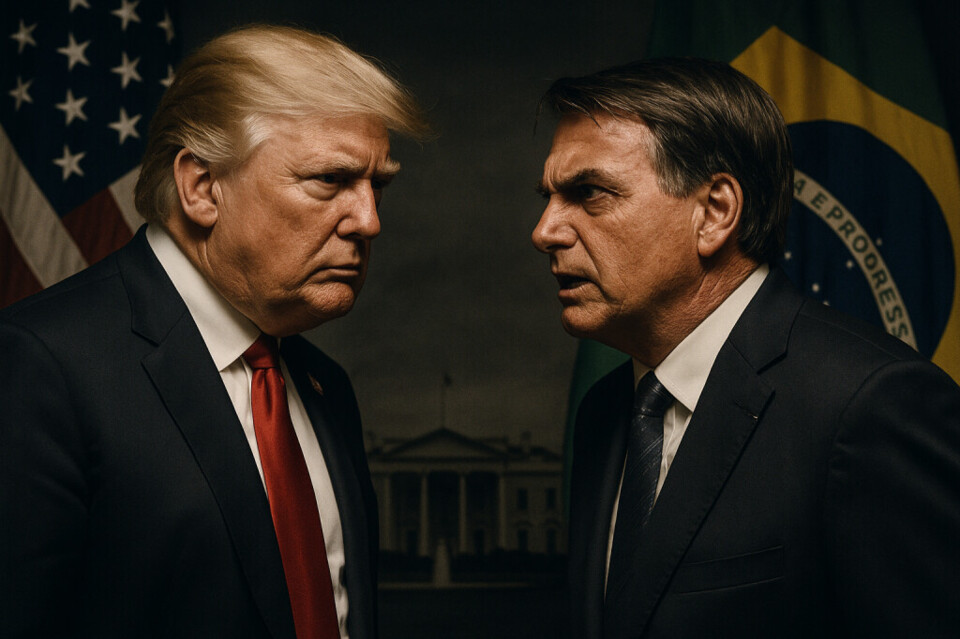
Donald Trump's decision to impose retaliatory tariffs on Brazil in response to Jair Bolsonaro’s prosecution marks a new escalation in the international campaign against Lulism—understood here not only as a political programme, but as a global symbol of a threatened progressive order. To grasp the depth of this confrontation, it is necessary to look back at the history of Brazil–US relations, shaped by geographic proximity and longstanding ideological alignments.

Beginning in the so-called “age of nationalisms,” particularly during the Getúlio Vargas era (1930–1945) and later under President Eurico Gaspar Dutra (1946–1951), Brazil began its long journey of political alignment with the United States. Dutra’s presidency marked the start of a doctrine positioning Brazil as a key player in Washington’s “backyard” during the Cold War. American interference took on more explicit contours with the 1964 military coup that ousted João Goulart—an operation supported logistically and politically by the United States under President Lyndon B. Johnson, known as “Operation Brother Sam.”

This U.S. involvement was rooted in Cold War logic, aimed at curbing the spread of communism—particularly in what Americans viewed as their strategic “southern garden.” It reflected the Monroe Doctrine’s hemispheric hegemony and the National Security Doctrine, which justified interference in sovereign states under the guise of defending democracy and U.S. interests abroad.

With the fall of the Berlin Wall and the wave of democratisation across the globe, Brazil entered a new phase in its relationship with the U.S. during the administrations of José Sarney, Fernando Collor de Mello, Itamar Franco, and Fernando Henrique Cardoso. This was a period marked by cooperation, economic liberalisation, and adherence to the principles of the Washington Consensus, as Brazil embraced globalisation.

The era of Luiz Inácio Lula da Silva ushered in a new chapter. Brazil gained significant symbolic capital both within the BRICs—where it emerged as a rising economic power and a voice of the Global South—and during Barack Obama’s presidency, in which Lula was seen as a progressive democratic icon with a strong labour-oriented ethos.

Donald Trump's rise to power amid a broader wave of right-wing illiberalism across the West paved the way for Jair Bolsonaro’s ascent in Brazil. This established a new American–Brazilian ideological axis rooted in shared illiberal values. In the Brazilian case, this was compounded by an explicit nostalgia for the military dictatorship and a symbolic rehabilitation of authoritarianism as a tool of “order” and “patriotism.”

It is within this context that Trump’s new 50% tariffs on all Brazilian imports—set to take effect on 1 August 2025—must be understood. These tariffs, framed as retaliation for Bolsonaro’s prosecution, which Trump has denounced as a “witch hunt,” are not purely economic—they are profoundly political.

This move serves a dual purpose. On one hand, it is an attack on multiculturalism and “cultural Marxism,” of which Lula is a prominent global representative. Brazil has become fertile ground for this ideological clash. On the other, the sanctions appear designed to bolster Bolsonaro’s possible return to power—a figure wholly aligned with Trump’s worldview—reinforcing an American-led axis of political and cultural hegemony in the region. In this way, the use of economic sanctions becomes a tool of ideological coercion, reflecting the increasing overlap between economic warfare and cultural warfare in illiberal regimes.

Brazil is once again a stage for global ideological confrontation. On one side stands the nationalist, autocratic right—Trump, Orbán, Le Pen, and, in different circumstances, Putin and Xi. On the other, multiculturalism and the globalist agenda, now maintained more by institutions than individual figureheads. Within this dynamic, Brazil is not just a mirror, but a laboratory where the battles between liberal democracy and contemporary authoritarianism become more visible—and more acute.

sexta-feira, 27 de junho de 2025

Trump: Impeachment or the Illiberal Impossibility of Toppling Narcissus

After the forced invocation of the concept of “rebellion” to deploy troops to parts of California—politicizing a legal mechanism (Title 10; Section 12406 of the U.S. Code) for symbolic purposes, as a display of personal strength and a statement on the alleged “incompetence” of California Governor Gavin Newsom—in a dual maneuver of federal intimidation and political humiliation, any other president would be at risk. But not Donald Trump.

The situation escalated dramatically with the authorization of airstrikes on Iran’s nuclear facilities (Fordow, Natanz, and Isfahan) without prior Congressional approval, a clear and serious violation of the U.S. Constitution and the 1973 War Powers Resolution.

This unilateral decision reveals how Donald Trump understands the presidency: a fully unipersonal office, unchecked, unbalanced, and affirming his unmistakably illiberal and autocratic character—a Republican American version of the “Sun King.” With this move, Trump delivers a heavy blow to the principles of liberal democracy, particularly the essential separation of powers, established since Montesquieu as one of the foundations of modern constitutionalism.

Although voices have been raised—from Democrats like Bernie Sanders, who called the attack “alarming” and “grossly unconstitutional,” to some Republicans, like constitutionalist Thomas Massie, who also denounced its illegality—Trump, like all illiberal populists, seems capable of escaping unscathed, thanks to two structural and interconnected factors:
(i) the American electoral system, which is disproportionate and gives rural, MAGA-oriented regions outsized influence; and
(ii) the loyalty of his voter base, which relishes Trump’s shows of strength—whether in war or against American liberal institutions—following him like a charismatic evangelical preacher.

So, while there is a clear legal basis for initiating impeachment proceedings against Donald Trump, recent history shows that such efforts are ineffective. On the contrary, impeachment often serves only to reinforce his political capital, painting him as a victim of the establishment—that is, the political system that cannot tolerate men who claim to be “the voice of the people.”

With both the House of Representatives and the Senate in Trump’s grip, impeachment is unviable, further entrenching his image as untouchable and unremovable. For now, listening to the U.S. Secretary of Defense, one senses that the Trump Doctrine is a fusion of the Cobra Kai motto—“Strike first, strike hard, no mercy”—with Bush Jr.’s imperial illusion of a world under American moral surveillance. That imperial dream may well lead the United States down dangerous paths that could reshape global geopolitics.

In the end, it might well mark the political downfall of Trump. But until then, the American president seems unwavering—proud of his own reflection in the water. We shall see whether he ends like Narcissus—and what world he drags down with him into the waters where he so admires himself.

terça-feira, 24 de junho de 2025

Trump: Impeachment or the Illiberal Impossibility of Toppling Narcissus


After the forced invocation of the concept of “rebellion” to deploy troops to parts of California—politicizing a legal mechanism (Title 10; Section 12406 of the U.S. Code) for symbolic purposes, as a display of personal strength and a statement on the alleged “incompetence” of California Governor Gavin Newsom—in a dual maneuver of federal intimidation and political humiliation, any other president would be at risk. But not Donald Trump.

The situation escalated dramatically with the authorization of airstrikes on Iran’s nuclear facilities (Fordow, Natanz, and Isfahan) without prior Congressional approval, a clear and serious violation of the U.S. Constitution and the 1973 War Powers Resolution.


This unilateral decision reveals how Donald Trump understands the presidency: a fully unipersonal office, unchecked, unbalanced, and affirming his unmistakably illiberal and autocratic character—a Republican American version of the “Sun King.” With this move, Trump delivers a heavy blow to the principles of liberal democracy, particularly the essential separation of powers, established since Montesquieu as one of the foundations of modern constitutionalism.

Although voices have been raised—from Democrats like Bernie Sanders, who called the attack “alarming” and “grossly unconstitutional,” to some Republicans, like constitutionalist Thomas Massie, who also denounced its illegality—Trump, like all illiberal populists, seems capable of escaping unscathed, thanks to two structural and interconnected factors:
(i) the American electoral system, which is disproportionate and gives rural, MAGA-oriented regions outsized influence; and
(ii) the loyalty of his voter base, which relishes Trump’s shows of strength—whether in war or against American liberal institutions—following him like a charismatic evangelical preacher.

So, while there is a clear legal basis for initiating impeachment proceedings against Donald Trump, recent history shows that such efforts are ineffective. On the contrary, impeachment often serves only to reinforce his political capital, painting him as a victim of the establishment—that is, the political system that cannot tolerate men who claim to be “the voice of the people.”

With both the House of Representatives and the Senate in Trump’s grip, impeachment is unviable, further entrenching his image as untouchable and unremovable. For now, listening to the U.S. Secretary of Defense, one senses that the Trump Doctrine is a fusion of the Cobra Kai motto—“Strike first, strike hard, no mercy”—with Bush Jr.’s imperial illusion of a world under American moral surveillance. That imperial dream may well lead the United States down dangerous paths that could reshape global geopolitics.

In the end, it might well mark the political downfall of Trump. But until then, the American president seems unwavering—proud of his own reflection in the water. We shall see whether he ends like Narcissus—and what world he drags down with him into the waters where he so admires himself.