Mostrar mensagens com a etiqueta iliberalism. Mostrar todas as mensagens

quinta-feira, 25 de setembro de 2025

The US Culture War against Europe

c6df2d68-080a-4543-9d72-a4bdfcb6f039.png.webp

“I hate to say that I told you so, but I told you so.” It may seem self-serving to appeal to one’s own foresight, but in the face of facts, it becomes inevitable.

Since 2018, I have been focusing on the so-called “culture wars”, a phenomenon rooted in the clash between so-called “conservatives” and “progressives” around moral issues such as abortion, the role of religion in society, same-sex marriage and other LGBT rights, gender identity, immigration, or national identity. These differences generate extreme polarization, amplified by social media, and translate into a genuine struggle for cultural hegemony at the heart of our societies.

In the face of the rise of a cultural left, which abandoned workers’ struggles to concentrate on identity-based causes and whose values gradually became dominant within social institutions, there emerged an inevitable reaction in the opposite direction—the so-called “cultural backlash”, a political response promoting ethnonationalist values.

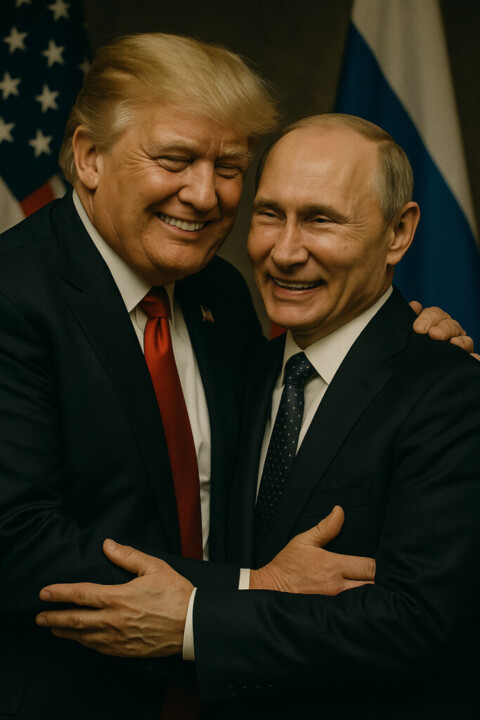
This brings us to the recent report by the European Council on Foreign Relations (ECFR), in partnership with the European Cultural Foundation, which states that Donald Trump is waging a “culture war” against liberal democracy in Europe, fostering an ideological shift toward nationalist and illiberal values.

A report that is not only unsurprising but also belated. For quite some time, Europe has been the privileged stage for illiberal experiments, reopening old wounds on a continent scarred by the traumas of nationalism and authoritarianism. The political transformations that unfolded in Europe after the 2008 financial crisis and the 2015 refugee crisis are paradigmatic of the electoral drift toward what political scientist Cas Mudde has called the “far right.”

The instrumentalization of economic resentment in favor of an ethnic and religious nationalism—directed against immigrants, the left, and multiculturalism—resonates deeply with the emergence of nationalisms in the 1930s, the results of which are all too well known.

Yet Le Pen, Orbán, Fico, Farage, Meloni, or Wilders are not merely the result of MAGA-style ideological channelling of resentment, as the report suggests. In fact, the “culture war” Trump is now waging against European institutions, the multilateral order, the values of fundamental rights grounded in the principle of human dignity, and the foundations of the liberal rule of law, began with Putin. And here the report falls short.

It is precisely with Vladimir Putin that the seeding of racial and religious nationalism in Europe begins—a process that culminates in the war in Ukraine. Let me explain: Putin viewed NATO’s eastward expansion not only as a geopolitical issue, but as a civilizational one. Conceiving Russia as its own civilization, based on a distinct cultural and religious identity, Byzantine in orientation and czarist in spirit, Putin regarded NATO’s presence on his border as a civilizational threat—representing the advance of liberal democracy and its inclusive values, which undermine Russia’s spiritual order with sexual freedom, women’s emancipation, and LGBT rights.

It was precisely to confront liberal democratic values that Putin financed the European radical right, promoting an illiberal order whose Western epicenter became Orbán’s Hungary.

Trump’s “culture war” against Europe is therefore part of a broader cultural war that unites a nationalist international of authoritarian inspiration, neofascist in kind. The exaltation of a nationalist ideal of economic, industrial, cultural, and geopolitical closure is a project that binds Trump and Putin with the same objective: to dismantle Europe’s human rights order and its liberal democracy from within.

Europeans would do well to remember the old maxim: those who fall asleep in democracy, wake up in dictatorship.

terça-feira, 1 de julho de 2025

Are There Lessons for Democracy in Budapest’s Pride March?

The path Viktor Orbán took from liberal democracy to democratic illiberalism was neither abrupt nor improvised. It was a cold and calculated march—along the ground cleared by the political merits of populism and the rising tide of illiberal values that Orbán anticipated and, by embracing, helped consolidate.

Broadly and clearly, democratic illiberalism rests on a reversal of the principles of political liberalism that once defined the rule of law, democratic pluralism, and constitutionalism. These principles include respect for institutional checks and balances, the safeguarding of political pluralism as a mechanism of representation, and the protection of fundamental rights as the constitutional bedrock of modern democracies.

Illiberal democracy, by contrast, elevates what might be called hyperdemos—a symbolic and operational hypertrophy of “the people” (demos) as the sole and ultimate source of political legitimacy. In this model, constitutional, institutional, and liberal frameworks that normally balance popular sovereignty are hollowed out. The people are invoked as a homogeneous and infallible entity, whose direct will justifies the dismantling of counterpowers, the marginalization of minorities, and the erosion of the deliberative public sphere.

Orbán—and other populist politicians, whether from the radical right or left—claim to be the “voice of the people,” but their definition of the people is narrow. It is the “pure people,” or “righteous citizens,” whose values align with their own narratives. Everyone else is suspect.

In the case of right-wing illiberal democracy, the people are equated with the national body—majoritarian by nature and intolerant of dissent. This includes structural machismo, radical moral conservatism, and significant doses of xenophobia and racism. Sexual, ethnic, racial, and national minorities are cast as the other—the threat to the sacred values of the nation.

And yet, on Saturday, June 28, something remarkable happened. In Budapest, approximately 200,000 people took to the streets to mark the 30th anniversary of the city's Pride March—defying police restrictions and Orbán’s illiberal agenda. Whether one personally supports Pride or not is beside the point. What mattered was the symbolic weight of the event: it was a mass act of resistance against moral uniformity and the assault on pluralism that the Hungarian government so clearly embodies.

There are lessons to be learned here. Western societies may be increasingly polarized, fed by populist narratives and social media-driven echo chambers, where outrage and alienation thrive. But the defeat of liberal democratic values is far from inevitable.

Resisting illiberal regimes—whether Orbán’s or Trump’s—is not about denying majoritarian will. It is about opposing those who, under the guise of representing the “authentic people,” unravel societies and corrode institutions in pursuit of autocracy.

The people of Budapest understood that the Pride March was not just about LGBTQ+ rights. It was about democratic diversity, political pluralism, and the foundational pillars of constitutional democracy.

domingo, 29 de junho de 2025

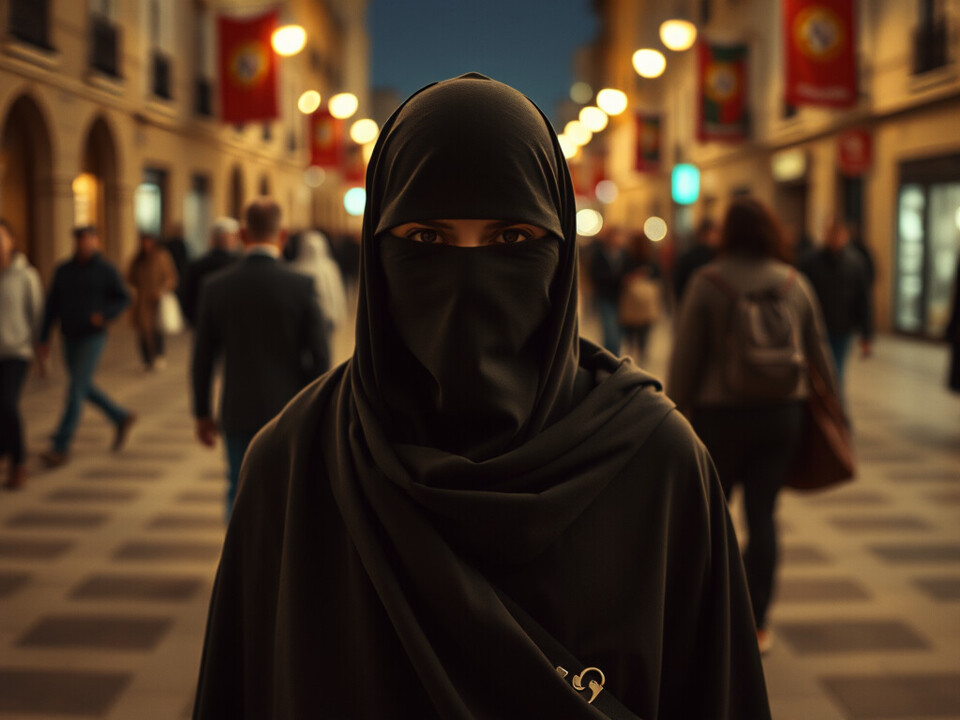
It's time for Burka: radical right is creating a 'political fact' in Portugal

create-a-featured-image-that-captures-the-contenti

Law often lags behind reality. This is a well-known maxim in legal theory: laws emerge, for better or worse, as responses to new and evolving social challenges. Politics, too, is meant to offer such responses—through negotiation among competing forces in search of what has been called “common ground.”

However, the rise of populist and demagogic movements has disrupted this process. In such contexts, “political facts” are no longer the product of pressing, undeniable realities, but often fabricated events—crafted to stir division and signal ideological belonging.

That is precisely where we find ourselves with a recent bill proposed by the far-right Chega party in Portugal. It aims to ban face coverings in public spaces—even when worn for religious reasons.

Though the bill is framed around public safety concerns—arguing that face coverings may hinder criminal investigations—it can be more accurately understood as an attempt to manufacture a political issue where none exists. On social media, party members have made it clear: this isn’t about all forms of face coverings; it’s specifically about banning the burka.

So, how is this a fabricated issue? Simply put: the burka is not a common sight in Portugal. One might argue that Chega is attempting to anticipate future problems. But in light of the party’s track record, it’s more plausible that this is part of a broader strategy to sustain a constant sense of cultural alarm. After the governing coalition (AD) took on the politically charged topics of immigration and citizenship law—triggering constitutional concerns and accusations of yielding to nativist pressure—Chega had to raise the stakes. What better way than to import a moral panic from other European contexts?

What’s telling is how the party justifies this measure: by positioning it as a feminist act, a defense of women’s rights against religious oppression. The bill states that anyone who forces another person to cover their face through threats, coercion, or abuse—specifically based on sex—should be punished under the criminal code for aggravated assault.

At the same time, the bill frames secularism as a justification for banning religious symbols in public institutions—schools, hospitals, public transport, and other state-run facilities. Here, Chega merges two traditionally contradictory lines of the radical right: an aggressive secularism aimed at Islam, and a nostalgic Christian nationalism seen in leaders like Viktor Orbán.

This rhetorical juggling act is part of a broader far-right strategy observed across Europe: embracing temporary “homonationalist” and “femonationalist” narratives—terms analyzed by Jean-Yves Camus and Nicolas Lebourg (2017), and by Sara R. Farris in In the Name of Women’s Rights (2017)—to defend so-called “civilizational values” against the threat of Islam.

This supports the view, articulated by theorists like Ernesto Laclau, that populism is less a coherent ideology than a flexible form of discourse and representation, built around a constant “us vs. them” logic. It is a political method that molds itself to the moment, always claiming to represent “the people” against elites, outsiders, or invented threats.

In the end, this bill is not about public safety, gender equality, or religious freedom. It is about staking ground in an imported culture war—and feeding the fire of identity politics with borrowed symbols. A classic maneuver in the ever-shifting playbook of the radical right.


Camus, J.-Y., & Lebourg, N. (2017). Far-Right Politics in Europe. Cambridge, MA: Harvard University Press.
Farris, S. R. (2017). In the Name of Women's Rights: The Rise of Femonationalism. Durham, NC: Duke University Press.

Laclau, E. (2005). On populist reason. Verso.


sexta-feira, 27 de junho de 2025

Trump: Impeachment or the Illiberal Impossibility of Toppling Narcissus

After the forced invocation of the concept of “rebellion” to deploy troops to parts of California—politicizing a legal mechanism (Title 10; Section 12406 of the U.S. Code) for symbolic purposes, as a display of personal strength and a statement on the alleged “incompetence” of California Governor Gavin Newsom—in a dual maneuver of federal intimidation and political humiliation, any other president would be at risk. But not Donald Trump.

The situation escalated dramatically with the authorization of airstrikes on Iran’s nuclear facilities (Fordow, Natanz, and Isfahan) without prior Congressional approval, a clear and serious violation of the U.S. Constitution and the 1973 War Powers Resolution.

This unilateral decision reveals how Donald Trump understands the presidency: a fully unipersonal office, unchecked, unbalanced, and affirming his unmistakably illiberal and autocratic character—a Republican American version of the “Sun King.” With this move, Trump delivers a heavy blow to the principles of liberal democracy, particularly the essential separation of powers, established since Montesquieu as one of the foundations of modern constitutionalism.

Although voices have been raised—from Democrats like Bernie Sanders, who called the attack “alarming” and “grossly unconstitutional,” to some Republicans, like constitutionalist Thomas Massie, who also denounced its illegality—Trump, like all illiberal populists, seems capable of escaping unscathed, thanks to two structural and interconnected factors:
(i) the American electoral system, which is disproportionate and gives rural, MAGA-oriented regions outsized influence; and
(ii) the loyalty of his voter base, which relishes Trump’s shows of strength—whether in war or against American liberal institutions—following him like a charismatic evangelical preacher.

So, while there is a clear legal basis for initiating impeachment proceedings against Donald Trump, recent history shows that such efforts are ineffective. On the contrary, impeachment often serves only to reinforce his political capital, painting him as a victim of the establishment—that is, the political system that cannot tolerate men who claim to be “the voice of the people.”

With both the House of Representatives and the Senate in Trump’s grip, impeachment is unviable, further entrenching his image as untouchable and unremovable. For now, listening to the U.S. Secretary of Defense, one senses that the Trump Doctrine is a fusion of the Cobra Kai motto—“Strike first, strike hard, no mercy”—with Bush Jr.’s imperial illusion of a world under American moral surveillance. That imperial dream may well lead the United States down dangerous paths that could reshape global geopolitics.

In the end, it might well mark the political downfall of Trump. But until then, the American president seems unwavering—proud of his own reflection in the water. We shall see whether he ends like Narcissus—and what world he drags down with him into the waters where he so admires himself.